Rethinking Screens
I’m an older millennial (born in 1988). The last generation that grew up without a screen in our hands. We had boredom, adventure, scraped knees, imagination, and long afternoons where we had to figure out what to do with ourselves. I remember bugging my mom all the time because my brother and I were bored. But, we survived, and so did she.
I’m really not just a wild hater of all things technolgoy. It has absolutely opened doors for us, and I’m grateful for it. But the longer I parent, the harder it is to ignore what access to technology, namely screens, are doing to our kids.We are not a screen-free household, but we’ve shifted into a screen-light one. And honestly, it happened because I had allowed them to take over my children’s childhood.
When Screens Become the Center of Everything
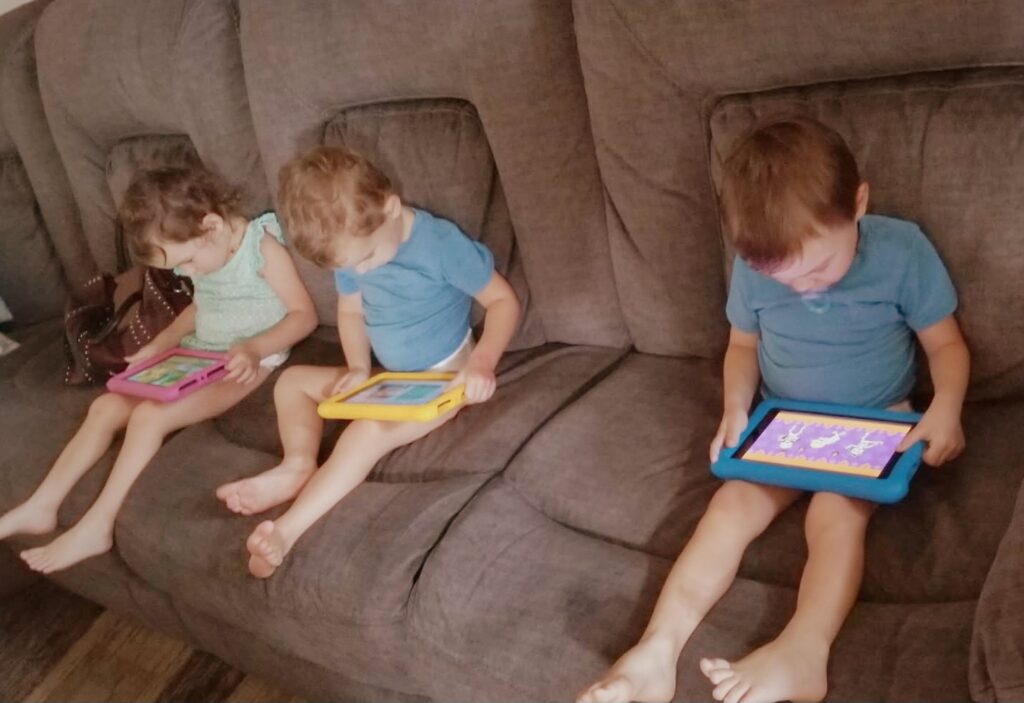
I noticed something in my kids that I couldn’t ignore. They were becoming obsessed with their devices, specifically YouTube. Everything else suddenly felt like an interruption to them. Family time, chores, playing outside, helping with dinner, even small, simple activities were all just obstacles in the way of the next moment they could get back to a screen. They started getting irrritated the moment something required their attention or ushing through tasks just to return to a device.
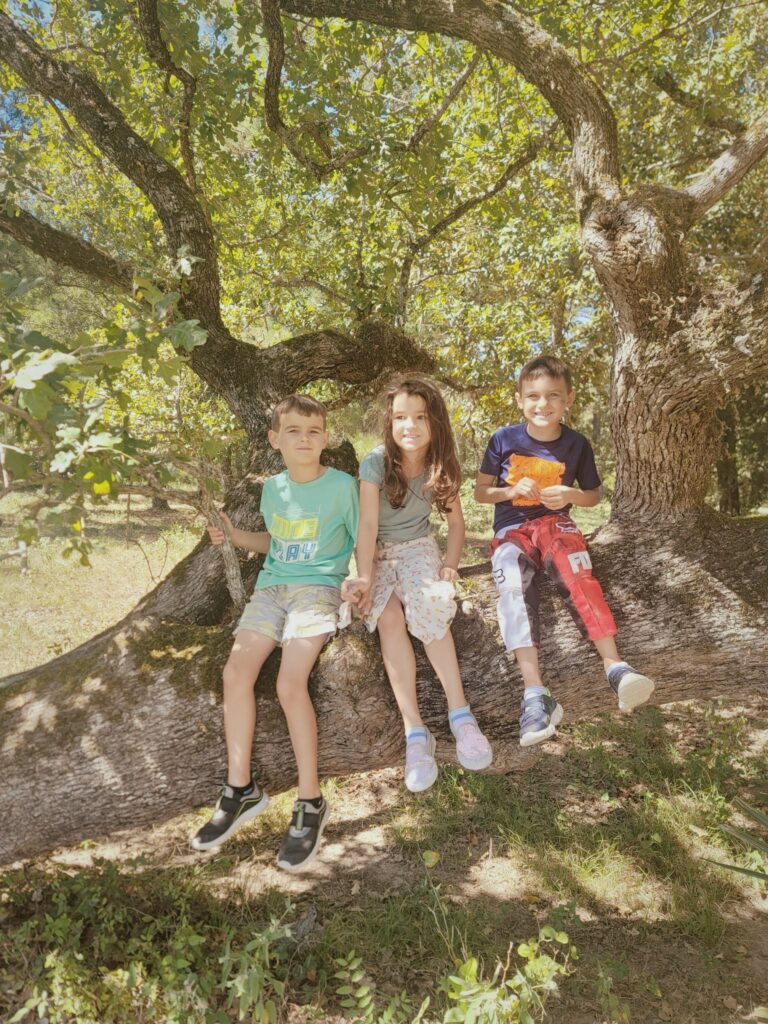
They were the age that I played with toys. I liked Barbies and dolls, reading, digging in the dirt, animals, etc. But they really didn’t play anything. And going outside? No way. There’s three of them! Built in playmates! But they refused to play creatively, and I think it was because they really didn’t seem to know how.
There was simply “nothing to do”. Consequently, they were isolating themselves in bedrooms for hours. At first I thought it was a phase, but it wasn’t. It was a shift in healthy development.
Creativity is a Skill
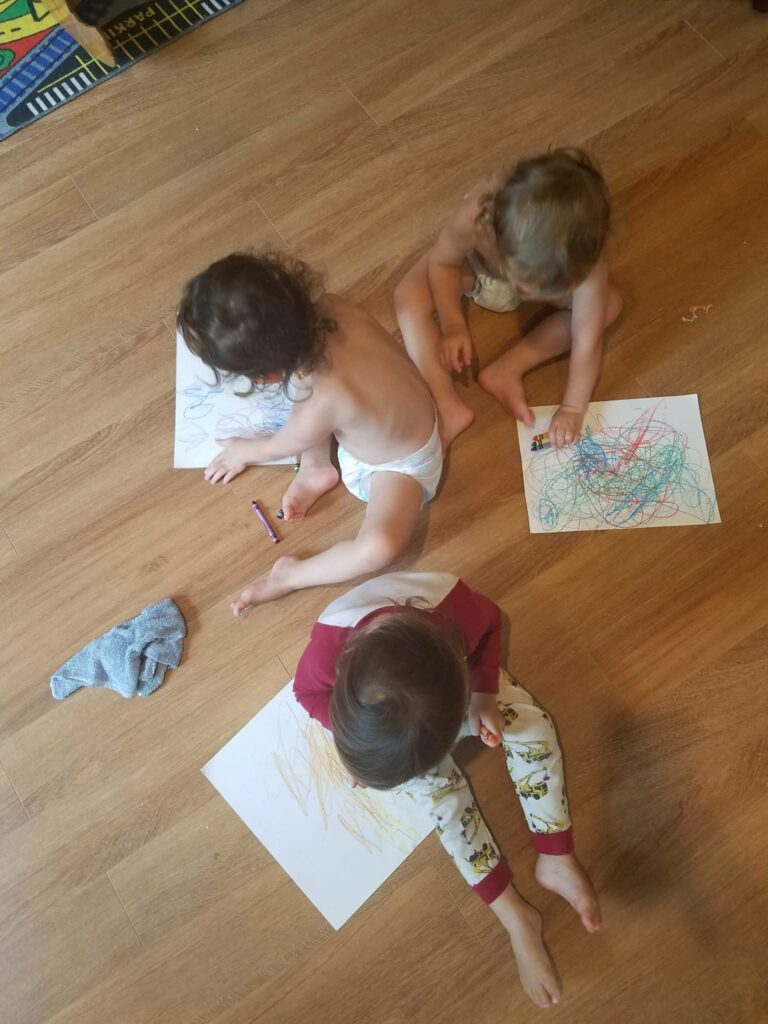
I grew up making up games, building forts, digging holes in the backyard, bike riding, reading, and creating entire imaginary worlds out of nothing. That’s when I realized, creativity is a skill, and they hadn’t learned it. For them, there really was “nothing to do” outside because they weren’t practiced using their creative mind. YouTube never encouraged them to engage this part of their brain and I never forced them to, either. Screens eliminate boredom, and boredom is where creativity lives.
Without downtime, without quiet moments, without the discomfort of “I don’t know what to do,” children don’t naturally reach for toys or art supplies. They don’t find a reason to role-play, tinker with things or really even problem solve.
They don’t need to. The screen hands them entertainment instantly, no questions, no imagination required. And I had to ask myself… what are they going to do when they’re older and they never learned how to figure real-world things out? Never learned to be bored? What are they capable of, but will never learn because they’ve never tried anything?
The Dopamine Problem
I dismissed my own concerns at first, but the behavior made more sense once I realized how screens were impacting the brain. YouTube and similar apps are designed for rapid, constant stimulation, quick hits of novelty, bright colors, fast cuts, nonstop dopamine drips. It’s addictive. It trains the brain to want more. And more. And more. Much like a drug.
Which means real life starts feeling…dull. So when I did make them go play, they’d mill around aimlessly and complain. Finding something to do was impossible. Their brain wasn’t conditioned for anything other than constant dopamine taps. How terrifying is that?
They only knew instant gratification. Anything slower or quieter like books, hobbies, chores, and conversations, just felt frustrating and pointless to them. They weren’t developing patience. Their tolerance for boredom disappeared. And impulse control? Nearly nonexistent.
This wasn’t who they were. It was who they were becoming because of their environment. The environment I was keeping them in.
Big Motor Movement
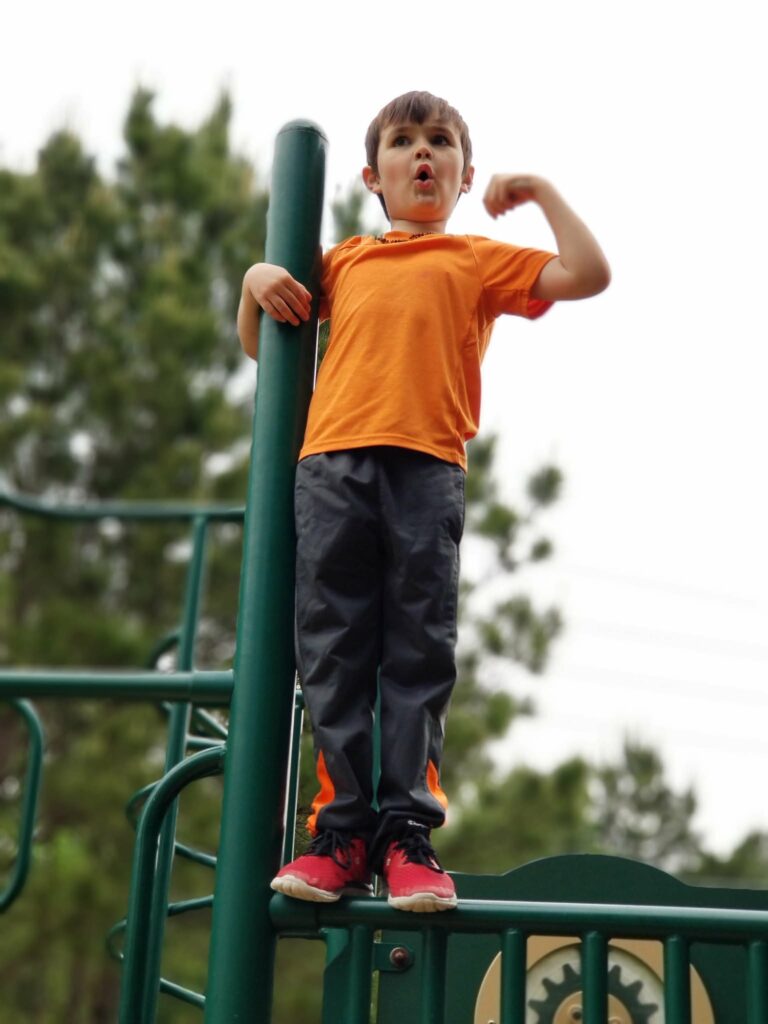
Another thing I couldn’t ignore was how physically still they had become. Childhood should be loud, clumsy, and active. Kids are supposed to be running, climbing, swinging, wrestling, digging, balancing, and exploring. A house stuffed with four children would naturally be so loud that parents send their kids outside. All of those big motor movements are how kids develop strength, coordination, learn their own body’s ability and confidence. Children should behave like bundles of uncontained energy.
But when screens sneak into their free time, those natural opportunities disappear. My kids weren’t moving because…well, why bother?
I think that a child on a screen is easier on the parent and that’s the biggest reason parents chooses to ignore the negative effects of a screen. Simply put, it gave me a quieter and cleaner home without children making messes and memories, without screaming and scampering through the house. Did it give me a sense of security that my children were safe at home? Yes. I always knew where they were. But at what cost?

The Missing Social and Life Skills
At first, I thought it was a blessing that my kids didn’t argue much. But then I realized the moment the screens were off, the arguing came back with a vengeance. And it wasn’t the kind of arguing that teaches anything. They weren’t developing problem-solving skills, learning patience, or working through disagreements. They were just irritated. Frustrated. The type of “annoyed” that comes from a brain expecting a screen and not getting one.
Screens were making them silent, not peaceful. Real social and life skills don’t grow in silence. Kids need to interact, both calmly and chaotically, to learn how to handle real people and real emotions. They need to stumble through it.
If kids aren’t negotiating, learning to compromise, sharing, resolve disagreements, empathize with each other, cooperate, deal with conflict, how do they ever learn? These are wildly important skills that ground them in life.
Screens stop those interactions from ever happening. They create a quiet that looks like calm, but it’s actually separation. Human skills don’t grow in isolation. They need the messy, imperfect moments of real childhood.
The Content Wasn’t Age-Appropriate
The final straw for me was the content itself. I trusted “Kids YouTube” far too long. I thought it protected them from ideas they weren’t ready for. And to a certain degree, it did. I didn’t witness extreme or shocking content, but it was full of themes and attitudes beyond their age:
-Teens acting like adults, or even simply children acting like teens
-Snarky, disrespectful humor
-Political comments and social issues
-Relationship drama
-Scary or anxious topics
“Influencer-style” behavior that I didn’t want modeled in my home
Their “influencers” should be me and our family values, not the rest of the world and whatever they had to say. That was when I banned YouTube entirely.
Becoming a Screen-Light Home
I made the decision and adjusted my expectations for the ensuing riot. Then I gently explained to them that I didn’t like the way Youtube was affecting their brains and it was going away. And they raged. It was akin to withdrawal from a drug. A drug I had been giving them daily.
It took a solid month for them to stop asking all the time and break the habit and several more months when they finally realized it was really not coming back, ever. Removing YouTube didn’t magically solve everything overnight, but it opened the door for what had been missing all along.
It has been quite interesting watching them develop curiosity and creative play. One of the things that alerted me to the issue was that they never “played house”. No one was pretending to be a baby, a dog, a mom, dad, etc. So when I started noticing them do just that, it reinforced my decision. Interactive and creative play and was developing in my children. They argued more, but they figured it out, too. As a parent, it’s my job to guide them through it.
“How do you think it makes John feel when you do that?” Or “It’s Ellie’s turn now, even though you don’t want to share.” These are examples of uncomfortable skills (considering another’s perspective and sharing) that children nor humans in general, are naturally inclined to do. However, being a balanced adult requires both.
They argued more but they also enjoyed each other, too. Their frustration tolerance improved. Their emotional balance evened out. They became more present.
I’m not anti-technology. I’m not pretending screens aren’t useful nor enjoyable. We watch movies, they play Minecraft (with limited time allowance), etc. But after watching my kids, I can say with complete certainty: screens need boundaries. Strong ones. Childhood is too short and too important to let an algorithm shape it.
And quite honestly, im concerned about the future of our world. When our screen addicted children become adults with their heads down, lost in an addictive virtual non-reality they won’t witness as the real world controls them. Won’t realize what they’re giving up. They will miss connections with other people and the joys of real life. Why get married? Have relationships? Children? Strive for more? Become leaders? All of that would take away from the instadopamine provided to them on a screen. Its a scary thought and I only hope that we figure out the solution before it’s too late.